



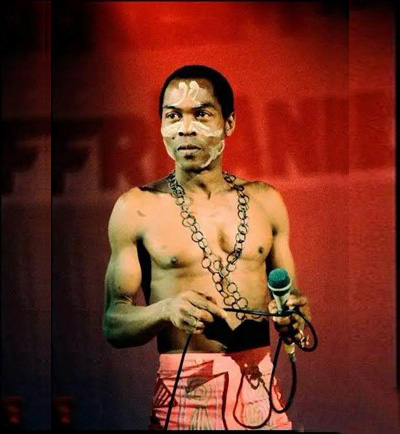

Fela Aníkúlápó Kuti was not merely a musician operating within the cultural economy of sound; he was an ideological force; an insurgent consciousness articulated through rhythm. His art did not seek permission, nor did it offer comfort. It disrupted. It confronted. It insisted. To invoke Fela is to encounter Africa’s unresolved dialogue with power, identity, and liberation; an unceasing refusal to be silenced by tyranny or softened by compromise.
Born in 1938 in Abeokuta, Nigeria, Fela emerged from a lineage steeped in political awakening and intellectual defiance. His mother, Funmilayo Ransome-Kuti, stood at the forefront of anti-colonial resistance and feminist agitation; his father, an educator committed to enlightenment as emancipation. This inheritance was not incidental, it was foundational. From early on, Fela was shaped by a worldview that understood freedom not as abstraction, but as a lived, contested reality.
Fela’s most enduring contribution to global culture was not simply Afrobeat as a musical genre, but Afrobeat as a philosophical system. Drawing from Yoruba cosmology, jazz improvisation, funk’s muscular rhythms, and highlife’s melodic structures, he forged a sonic architecture capable of carrying historical memory and political urgency simultaneously. The extended compositions, driven by polyrhythmic repetition, were acts of endurance forcing the listener to remain present, attentive, and implicated. Language, delivered in Pidgin English, became a strategic choice: a radical democratization of political discourse that bypassed elite intellectualism and spoke directly to the masses.
In an era when artistic survival often depended on neutrality, Fela made antagonism his method. His music functioned as indictment. He named state violence, exposed military authoritarianism, interrogated neo-colonial dependency, and dismantled the psychological residue of Western domination. Works such as Zombie, Sorrow, Tears and Blood, and Coffin for Head of State were not metaphorical gestures; they were explicit confrontations with the Nigerian state and its coercive apparatus. The response was predictable: incarceration, surveillance, physical assault, and systemic persecution. The destruction of the Kalakuta Republic and the fatal injury inflicted upon his mother marked not only personal tragedy, but the violent lengths to which power will go when confronted by truth articulated too clearly.
Yet capitulation was never an option.
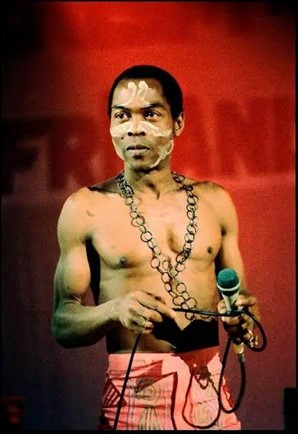
In renaming himself Aníkúlápó; “the one who carries death in his pouch”. Fela performed a symbolic rupture with fear itself. It was a metaphysical declaration: that life devoid of truth is already a form of death. His body became a site of resistance; his lifestyle, a deliberate rejection of imposed moralities; his Pan-Africanism, a reclamation of cultural sovereignty. Even the most controversial aspects of his life were inseparable from his broader project of dismantling colonial epistemologies and asserting African self-definition on uncompromising terms.
Fela’s influence transcended geography and generation. He offered Africa a global voice that did not seek assimilation or validation from Western canons. His ideological descendants are evident in contemporary Afrobeat and Afrobeats, political art movements, performance spaces, and protest cultures that continue to weaponize creativity against injustice. From Lagos to Accra, from London to New York, Fela’s echo persists wherever art refuses obedience.
Decades after his passing in 1997, Fela Kuti remains profoundly and uncomfortably relevant. In societies still plagued by extractive governance, institutional violence, and silenced dissent, his music functions less as archive and more as diagnosis. It reminds us that liberation is not an event, but a process often unfinished, always contested.
Fela lives.
Kemi Keys
In rhythm.
In resistance.
In radical freedom.
Fela did not believe in art as escape.
He believed in art as confrontation.
As memory. As resistance.And in that refusal to be neutral, he bequeathed to Africa and the world; a timeless lesson: that sound, when aligned with truth, can become a revolutionary force.
