




MUHAMMED FULATA BORNU; WOES OF AN OBJECT OF PEACE
This letter is being taken to you by Muhamed Fulata Bornu who is proceeding to Accra to be chief priest of the Mussulmans at that place in accordance with the request from Native Officer Ali and Butcher Ibrahima made through me. Please see that he is duly presented to the heads of the community. I have impressed upon him the necessity for his working so as to secure the peace and spiritual welfare of all the Mussulmans at Accra.
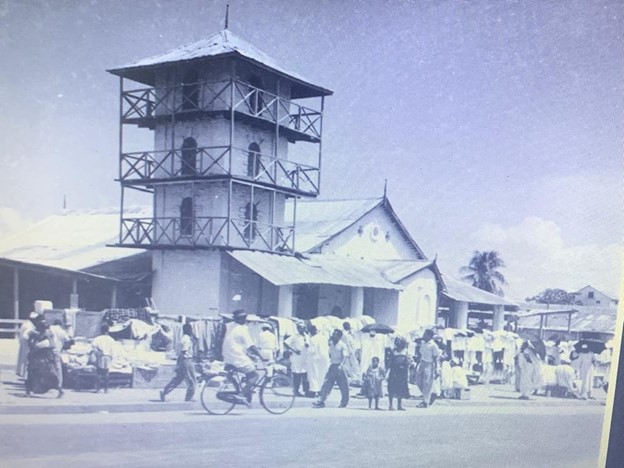
The letter dated, 21st February 1903, was the greenlight for Imam Fulata Bornu’s sojourn to Accra as the new Imam of the Muslim Community of Accra. He was the 7th Imam of Accra. After series of disputes between the Yorubas and Hausas especially about succession, Imam Muhammed had to be brought in from Cape Coast to act as the Imam of the then Mosque of the Mohammedan Community.
Chief Braimah and Native Officer Ali were the facilitators of his appointment. They were the headmen of the Lagosians and Hausas respectively.
Below is part of the conversation that ensued between Governor, Major Sir M. Nathan, R.E.M. Hull, Esq., C.M.G. Secretary for Native Affairs, Native Officer Ali and Chief Brimah. In Accra, on Tuesday, 27th January, 1903. This was on the issue of appointment of an imam outside the jurisdiction before they settled on Fulata Bornu.
Governor: What have you been able to do with regard to the selection of a Priest for the Mohammedans?
Brimah: We are trying to get somebody from outside.
Governor: Would it not be better to get one from here if possible?
Brimah: It would not do to select one from Accra for the reason that if the man selected belonged to either of the two Mohammedan Communities objection would be taken to him.
The Mohammedans in Zango will object to a man from this side there and those on this side will object to a man from Zango.
Governor: The priest when holding service in the mosque reads the Arabic so that is what you want is a man who speaks Arabic well?
Brimah: Yes, a man who reads and speaks Arabic.
Governor: I leave the matter in your hands and you must get someone as soon as you can.
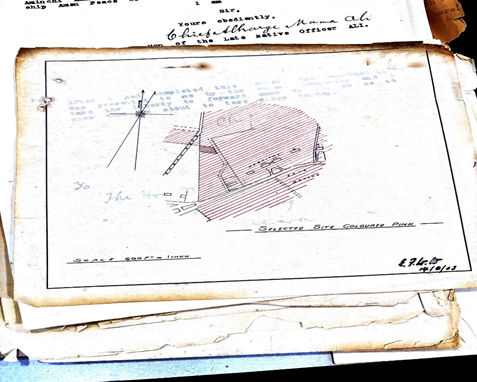
Imam then came in on the behest of the government and these community heads. His house was around the Mosque area (area not clear). Figure 1 is a map of the land his house was built.
He was supposed to be paid by the government and then proceeds from offerings from the mosque. He was given land to build his house on. He did his work diligently and as he was leaving for his home town in the current Nigeria in 1909, there was peace and that made way for the appointment of Mallam Bako as the new Imam and Chief Brimah as the new Chief Headman after the demise of Native Officer Ali.
However, Imam met hurdles that broke his resolve to be able to stay for as long as he might have wanted to stay. First of all, much as he had the support of the tribal leaders, the Imam whose position he was currently holding, did not really cooperate with him. He found that uncomfortable. He complained about some leaders not greeting and not responding to his greetings.
The government also reneged on paying his allowances. The community did not pay him either. He was constantly begging to be paid. The rent of the land he was residing on became a headache for him as he was constantly hounded by the original landowner to pay for his delayed rents. For instance, he delayed in paying 1shilling as his rent was due on 2nd September 1904.
He then depended on the offerings from the mosque to help himself. Unfortunately, that proved to be difficult. Below is a report he made to the Secretary of Native Affairs on Monday 20th February 1905.
Mallam Fulata Bornu: I receive no salary from the Mohammedan community in Accra. It is customary after officiating for the worshiper to contribute some offering which they lay before me: some give 6d, some 3d, which I keep. On the last occasion, after mosque, the elders came and asked me why I did not share the money with them. I replied that it was not customary, but I gave them a portion of the collection.  Only last Wednesday they sent for me to Malam Dangimba's house and I did not like the way they spoke to me; they even went so far as to abuse me, and yesterday they returned the money to me and said they would depose me and make Malam Abubakari Fulani High Priest if I was not careful.”
S.N.A: Have you told Native Officers Ali and Harri Zenuwa?
Mallam: Yes
S.N.A: Why have they not come with you today?
Mallam: They told me to come and complain to you as it was the Government who brought me to Accra.
S.N.A: I think the best plan is for me to send for Native Officers Ali and Harri Zenuwa, and for you to accompany them, then we hear what they have to say.
He had to endure all these but the ultimate aim of finding interim peace, was achieved as at the time of his departure. The then acting governor, in a meeting on 21st June, 1909 said, he had heard with great regret that the El Imam Fulata Bornu, having expressed a wish to return to his native land in Northern Nigeria, promised that the El Imam was going to be given a letter of Introduction to the Northern Nigeria authorities. He was glad to learn that the work of the El Imam in Accra had resulted in the establishment of unity among the various sections of the Mohamedan community.
#Oobake
